
Let's Talk About Hormonal Acne
The only way out is through.

First, let’s take a nice deep breath. Hormonal acne can be challenging for so many reasons — it’s painful, hard to cover up, and often feels like it’s never going away. Don’t worry, though, I promise you it will.
Hormonal acne is extremely common, I see it all the time in The Studio and it really affects people so much. Unlike what we think of as “traditional acne,” which stems from bacteria, hormonal acne comes from fluctuations of hormone levels inside the body. It tends to show up as deep, red bumps around the jawline, but it can appear anywhere.
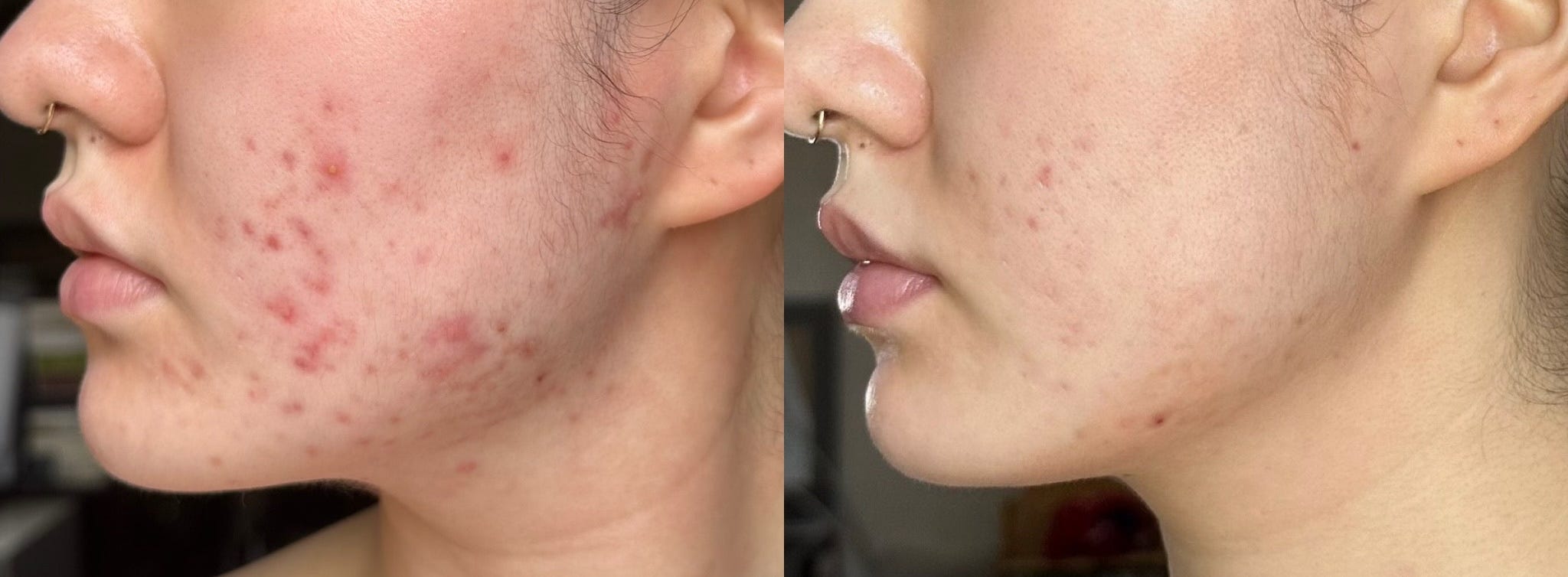
The first thing I ask clients is if anything has changed in their life that coincides with the onset of hormonal acne. Hormones can be affected by many things: sleep, stress, and lifestyle all play a huge role. The way you exercise can also impact your hormones: if you do a lot of weight training, your testosterone can go higher, for example. There’s a big correlation between gut health and hormones; all of this can affect your skin. So lifestyle can be a powerful piece of knowledge when we’re working on clearing hormonal acne.
The second thing I ask is to start tracking exactly when you’re getting your breakouts. This can give us a clue about why you’re getting them, and help us take preventative action.
So, what can you do to treat it? The first thing I do with some of my clients is a skin cycling treatment. The week before they know they’re going to break out (after tracking their breakouts), we ramp up the anti-acne actives like a Benzoyl Peroxide spot treatment every other day and use mandelic acid on the off days to exfoliate. I also have them swap out any heavy moisturizer or creams for oil-free versions. Most often, my female clients are getting their breakouts a week before their period, so we’ll start skin cycling then.
As we treat the surface of the skin, it’s important to look at what you’re putting in your body, too. Try reducing common acne triggers like peanut butter, eggs, and dairy (especially skimmed dairy), and any foods that boost your insulin like bread, pasta, sugary drinks, etc. These could contribute to excessive sebum production and mess with hormones.
You may have heard of (or had) cortisone shots that you can get in a dermatologist’s office. Always talk to your doctor about what’s best for you, but be conscious of scarring. As an esthetician, I often see dents and divots in the skin after a client has had a cortisone shot because when you put a steroid into the area, white blood cells attack and that can cause damage to the skin.
As a lighter option, I recommend icing your hormonal spot to bring down the inflammation. You can use a regular ice cube directly on the spot for a few minutes, then swap it out for a heating pad, and then go back and forth. This will bring down the redness.
You could also try Aerolase, which is actually a laser hair treatment, that can be helpful with excessive hair growth that sometimes comes from hormonal imbalances; removing the hair can sometimes bring down the intensity of cysts.
Some medications can impact your hormones and skin health. Always talk to your doctor about your goals and what is right for you.
Hormonal acne is complicated, and there is definitely no one-size-fits-all formula for what works. But there are things we can try and there absolutely is hope, especially when you look at the problem holistically. There’s a really cool doctor that I love to refer people to named Dr. Bryant. He’s a holistic doctor in L.A. who works with The Things We Do in Venice. He’s doing a lot of fascinating data pulling about acne and skin, the correlation between acne and sugar, why hormonal acne flares up, and more.
Any questions? You know where to find me.
Xx
Sofie
Great read! I get hormonal acne cuz I am in my perimenopause era. it sucks! :(
It’s a bitch, but can be managed. Loved this one 👏